Protein builds and repairs muscle, makes enzymes and hormones, supports immune function and keeps you full. But how much protein do you actually need per day? The official minimum is lower than many people think, while the amount that best supports muscle, healthy aging and weight loss is higher. Here is how to work out your number.
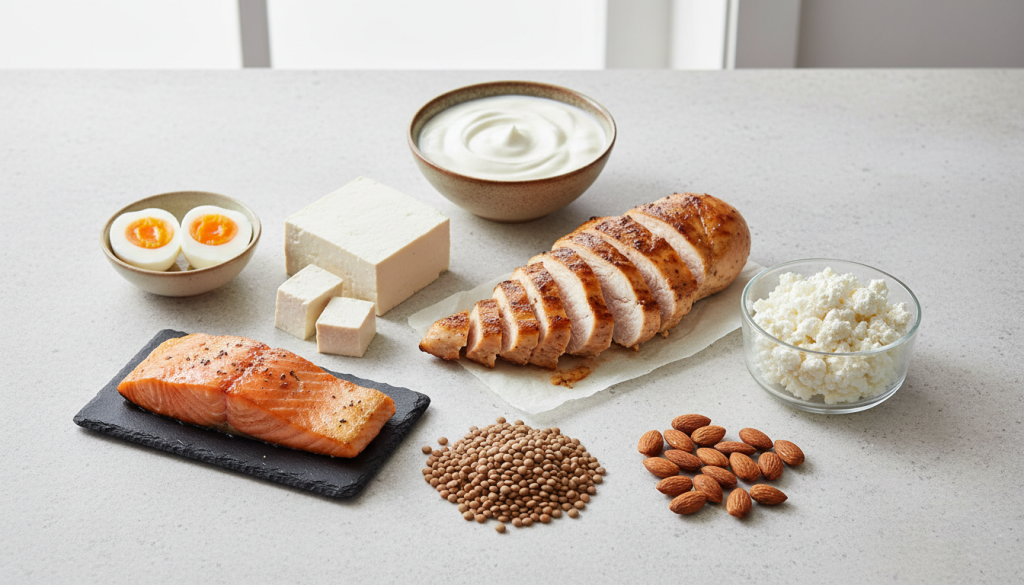
Daily protein needs at a glance
| Situation | Grams per kg of body weight per day | Example: 70 kg (154 lb) adult |
|---|---|---|
| Minimum for most sedentary adults (RDA) | 0.8 g/kg | 56 g |
| Adults over 65 | 1.0–1.2 g/kg | 70–84 g |
| Regular exercise | 1.2–1.6 g/kg | 84–112 g |
| Building muscle with strength training | 1.6–2.0 g/kg | 112–140 g |
| Losing weight (to protect muscle) | 1.2–1.6 g/kg | 84–112 g |
| Pregnancy | About 1.1 g/kg | About 77 g |
The RDA of 0.8 g/kg is the amount needed to prevent deficiency in most healthy adults, not necessarily the amount for optimal health.
Why older adults need more protein
From around age 30, adults gradually lose muscle mass, and the rate speeds up after 60. Aging muscles also respond less efficiently to protein, a phenomenon called anabolic resistance. Eating 1.0–1.2 g/kg, combined with strength training, helps preserve muscle, strength and independence.
Protein for weight loss
Higher-protein diets help weight loss in three ways: protein is the most filling nutrient, it takes more energy to digest, and it helps you hold on to muscle while you lose fat. Combining adequate protein with an eating pattern you can sustain, such as intermittent fasting for some people, makes a calorie deficit easier.
Spread protein across your meals
Many people eat little protein at breakfast and most of it at dinner. Research suggests muscles respond best when protein is spread out, with about 25–40 grams per meal (roughly 0.4 g/kg) across three or four meals.
High-protein foods chart
| Food | Serving | Protein |
|---|---|---|
| Chicken breast, cooked | 3 oz (85 g) | 26 g |
| Cottage cheese | 1 cup | 25 g |
| Salmon, cooked | 3 oz (85 g) | 22 g |
| Firm tofu | ½ cup | about 20 g |
| Canned tuna | 3 oz (85 g) | about 20 g |
| Lentils, cooked | 1 cup | 18 g |
| Edamame | 1 cup | 18 g |
| Greek yogurt, plain | ¾ cup (170 g) | about 17 g |
| Milk or soy milk | 1 cup | 7–8 g |
| Quinoa, cooked | 1 cup | 8 g |
| Egg | 1 large | 6 g |
| Almonds | 1 oz (28 g) | 6 g |
Plant-based protein tips
- Combine different plant proteins over the day, such as beans with grains, to get all essential amino acids.
- Soy foods (tofu, tempeh, edamame) are complete proteins.
- Vegans may benefit from aiming toward the higher end of the ranges above, because plant proteins are slightly less digestible.
A sample 100-gram protein day
- Breakfast: Greek yogurt with berries and a sprinkle of almonds (about 23 g)
- Lunch: lentil and quinoa salad with feta (about 28 g)
- Snack: two boiled eggs (12 g)
- Dinner: 4 oz grilled chicken or tofu with vegetables and rice (about 35 g)
Can you eat too much protein?
For healthy adults, intakes up to about 2 g/kg appear safe. People with chronic kidney disease, however, are often advised to limit protein, so check with your doctor. Very high-protein diets that crowd out fiber-rich plants can also cause constipation.
Do you need protein powder?
No, but it can be a convenient way to hit your target, especially after workouts or for people with small appetites. Choose products with third-party testing, as supplements are not tightly regulated.
Frequently asked questions
How much protein do I need to build muscle?
Most research supports about 1.6 g/kg per day, with little additional benefit above 2.2 g/kg, combined with progressive strength training.
Is 100 grams of protein a day too much?
For most active adults, 100 g a day is reasonable and safe. For a smaller, sedentary person it may be more than needed, but it is not harmful if kidneys are healthy.
What are signs of not eating enough protein?
Loss of muscle, weakness, slow wound healing, frequent hunger, brittle hair and nails and, in severe cases, swelling in the legs.
Medical disclaimer: This article is for general education only and is not a substitute for personal medical advice. If you have kidney or liver disease, ask your doctor how much protein is right for you.
