Omega-3 fatty acids are essential fats: your body cannot make enough of them, so they must come from food. They form part of every cell membrane, are highly concentrated in the brain and eyes and help regulate inflammation, heart rhythm and blood fats. This guide covers omega-3 benefits that are backed by research, the best food sources and what to know about supplements.
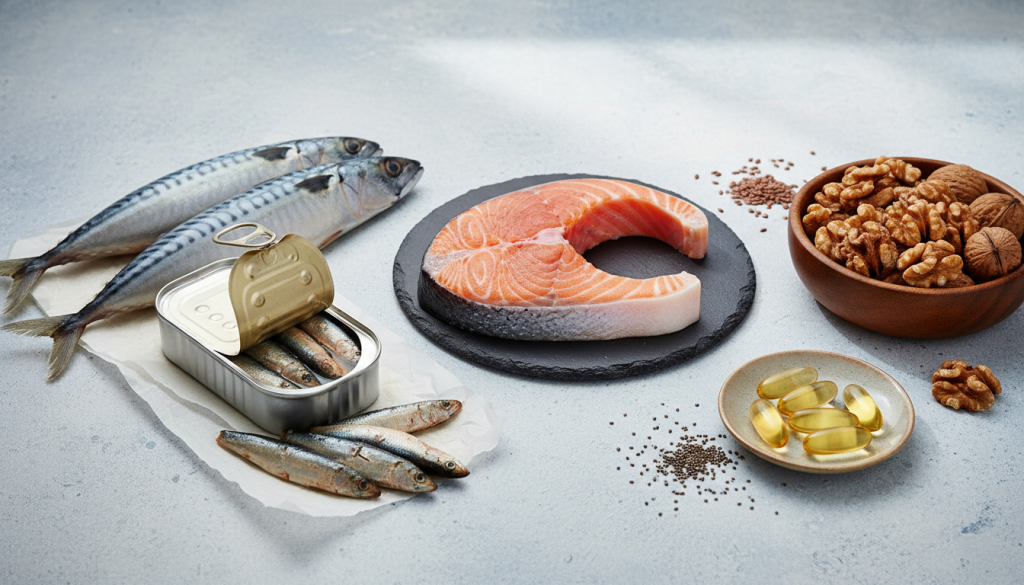
The three main omega-3s
- EPA (eicosapentaenoic acid): found in oily fish; most linked to heart and anti-inflammatory effects.
- DHA (docosahexaenoic acid): found in oily fish and algae; a key building block of the brain and retina.
- ALA (alpha-linolenic acid): found in plants such as flaxseed, chia and walnuts. The body converts only a small fraction (often less than 10%) into EPA and DHA.
Evidence-based omega-3 benefits
Lower triglycerides
This is the clearest benefit. Prescription doses of 2–4 grams of EPA and DHA a day can lower high triglycerides by about 20–30%.
Heart health
Eating fish regularly is consistently linked to lower rates of heart disease. For supplements, results are mixed: large trials of standard 1-gram fish oil capsules in the general population showed little or no reduction in heart attacks or strokes, while a high-dose purified EPA drug reduced cardiovascular events by about 25% in high-risk patients already on statins. For most people, eating oily fish is the recommended approach. See also our guide on lowering cholesterol naturally.
Pregnancy and infant development
DHA is important for a baby’s brain and eye development. Omega-3 supplementation in pregnancy also modestly reduces the risk of early preterm birth. Pregnant women are advised to eat 2–3 servings a week of low-mercury fish.
Mood
Some studies suggest EPA-rich supplements may modestly help depression when used alongside standard treatment. They are not a replacement for it.
Joint pain and inflammation
Fish oil may reduce morning stiffness and joint tenderness in rheumatoid arthritis. Omega-3s are a key part of an anti-inflammatory diet.
How much omega-3 do you need?
- Fish: the American Heart Association recommends at least two servings of fish a week, preferably oily fish, which provides roughly 250–500 mg of EPA and DHA a day on average.
- ALA: the adequate intake is 1.6 g a day for men and 1.1 g a day for women.
Best food sources of omega-3
| Food | Serving | Omega-3 content |
|---|---|---|
| Atlantic salmon, farmed, cooked | 3 oz (85 g) | about 1.8 g EPA + DHA |
| Herring, cooked | 3 oz (85 g) | about 1.7 g EPA + DHA |
| Sardines, canned in oil | 3 oz (85 g) | about 1.2 g EPA + DHA |
| Atlantic mackerel, cooked | 3 oz (85 g) | about 1.0 g EPA + DHA |
| Rainbow trout, cooked | 3 oz (85 g) | about 0.8 g EPA + DHA |
| Light tuna, canned | 3 oz (85 g) | about 0.2 g EPA + DHA |
| Flaxseed oil | 1 tbsp | about 7.3 g ALA |
| Chia seeds | 1 oz (28 g) | about 5.1 g ALA |
| Walnuts | 1 oz (28 g) | about 2.6 g ALA |
| Ground flaxseed | 1 tbsp | about 2.3 g ALA |
Salmon, sardines, herring, anchovies and trout are high in omega-3s and low in mercury. Limit high-mercury fish such as swordfish, king mackerel, shark and bigeye tuna, especially during pregnancy.
Choosing an omega-3 supplement
- Check EPA + DHA per serving, not just “fish oil” milligrams. A 1,000 mg capsule may contain only 300 mg of EPA and DHA.
- Look for third-party testing for purity, freshness and contaminants.
- Vegetarians and vegans can choose algae oil, which supplies DHA and often EPA.
- Take with a meal to improve absorption and reduce fishy burps.
- Store away from heat and light and discard if it smells rancid.
Side effects and safety
- Common side effects are mild: fishy aftertaste, heartburn, nausea and loose stools.
- High-dose supplements (around 1 g a day or more) are associated with a slightly increased risk of atrial fibrillation, an irregular heart rhythm, in some studies.
- High doses may increase bleeding risk in people taking blood thinners such as warfarin. Talk to your doctor first.
- Fish oil supplements do not contain meaningful mercury when properly purified.
Frequently asked questions
What are signs of omega-3 deficiency?
True deficiency is rare. Low intake may be associated with dry, rough skin, but these signs are not specific. A blood test called the omega-3 index can measure levels.
Is it better to get omega-3 from food or supplements?
Food is preferred because oily fish also provides protein, vitamin D, selenium and other nutrients. Supplements are an option if you do not eat fish.
Can omega-3 help you lose weight?
There is no strong evidence that omega-3 supplements cause meaningful weight loss on their own.
Medical disclaimer: This article is for general education only and is not a substitute for personal medical advice. Talk to your doctor before taking omega-3 supplements, especially if you take blood thinners, have a heart rhythm condition or are pregnant.
