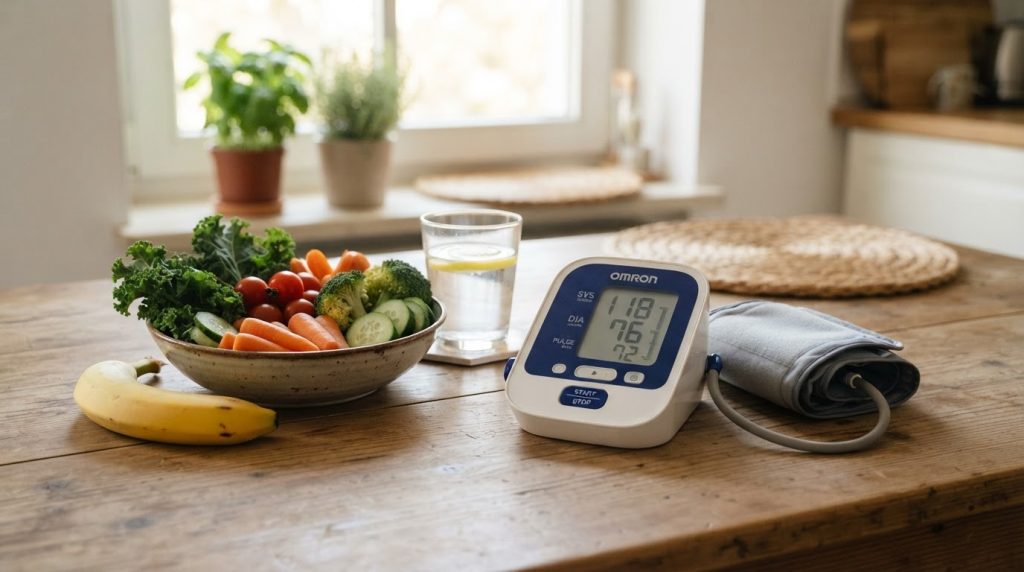
High blood pressure (hypertension) is often called a “silent killer” because it rarely causes symptoms, yet it is a leading cause of heart attacks, strokes and kidney disease. Lifestyle changes can lower it significantly, and for some people they are enough to avoid or reduce medication.
Key takeaways
- Normal blood pressure is below 120/80 mmHg.
- Cutting salt, eating more potassium-rich foods and following the DASH diet are among the most effective changes.
- Regular exercise and losing excess weight both lower blood pressure.
- Check your blood pressure regularly; most people with hypertension feel fine.
Blood pressure categories for adults
| Category | Systolic (top) | Diastolic (bottom) | |
|---|---|---|---|
| Normal | Below 120 | and | Below 80 |
| Elevated | 120–129 | and | Below 80 |
| High, stage 1 | 130–139 | or | 80–89 |
| High, stage 2 | 140 or higher | or | 90 or higher |
| Severe (seek care) | Above 180 | and/or | Above 120 |
9 ways to lower blood pressure
- Eat less salt. Aim for under 2,300 mg of sodium a day, ideally around 1,500 mg. Most salt comes from bread, processed and restaurant foods.
- Follow the DASH diet: plenty of vegetables, fruit, whole grains, low-fat dairy, beans and nuts, with less saturated fat and sugar.
- Eat potassium-rich foods such as bananas, potatoes, beans, spinach and yogurt (unless you have kidney disease or your doctor advises otherwise).
- Exercise regularly. Aim for at least 150 minutes a week of moderate activity, such as brisk walking. Try zone 2 cardio.
- Lose excess weight. Blood pressure often drops by roughly 1 mmHg for every kilogram lost. See how to lose weight safely.
- Limit alcohol to no more than one drink a day for women and two for men, or less.
- Don’t smoke.
- Sleep well. Short sleep and untreated sleep apnea raise blood pressure.
- Manage stress with exercise, relaxation and time outdoors.
Measuring blood pressure at home
Use a validated upper-arm monitor. Sit quietly for 5 minutes with your back supported and feet flat, arm resting at heart level. Take two readings a minute apart, morning and evening, and share the results with your doctor.
When to get help
See a doctor if your readings are regularly 130/80 or higher. Call emergency services if your blood pressure is above 180/120 and you have chest pain, shortness of breath, back pain, numbness or weakness, vision changes or difficulty speaking. Never stop prescribed blood pressure medicine without medical advice.
Frequently asked questions
How fast can lifestyle changes lower blood pressure?
Changes such as cutting salt and following the DASH diet can lower blood pressure within a few weeks.
Does high blood pressure cause headaches?
Usually not. Headaches are rare unless blood pressure is extremely high, which is why regular checks matter.
This article is for general information only and is not medical advice. Talk to your doctor about your blood pressure and before changing any medicines.
