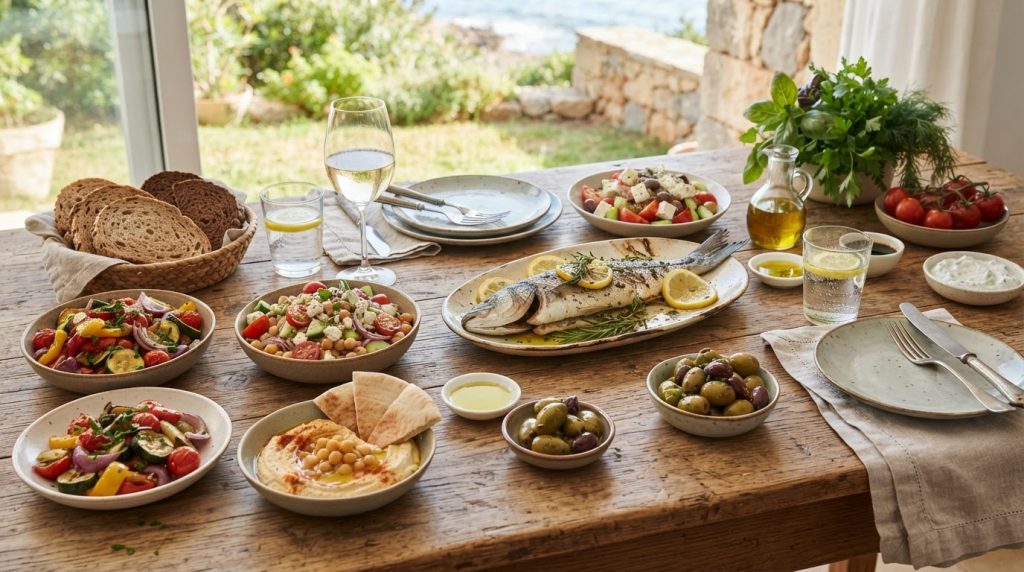
The Mediterranean diet isn’t a strict plan. It’s a way of eating based on the traditional diets of countries such as Greece, Italy and Spain: plenty of plants, olive oil and fish, and less red meat and sugar. It is consistently ranked among the healthiest diets and is easy to adapt to almost any cuisine.
Key takeaways
- Base meals on vegetables, fruit, whole grains, beans, nuts and olive oil.
- Eat fish at least twice a week; have poultry, eggs and dairy in moderation.
- Limit red and processed meat, sweets and refined grains.
- Large studies link it to lower rates of heart disease and stroke.
What to eat and what to limit
| How often | Foods |
|---|---|
| Every day | Vegetables, fruit, whole grains, beans and lentils, nuts and seeds, herbs and spices, extra-virgin olive oil |
| At least twice a week | Fish and seafood, especially oily fish such as salmon and sardines |
| In moderation | Poultry, eggs, yogurt and cheese |
| Rarely | Red meat, processed meats, sugary drinks, sweets and refined grains |
What the research shows
In the large PREDIMED trial in Spain, people at high risk of heart disease who followed a Mediterranean diet supplemented with extra-virgin olive oil or nuts had about 30% fewer heart attacks, strokes and cardiovascular deaths than a group advised to follow a lower-fat diet. Other studies link the diet with lower rates of type 2 diabetes, healthier aging and better weight management. Its high fiber and healthy fat content also help lower cholesterol.
A sample Mediterranean day
- Breakfast: Greek yogurt with berries, walnuts and a drizzle of honey
- Lunch: Lentil and vegetable soup, whole-grain bread, a side salad dressed with olive oil and lemon
- Snack: An apple and a small handful of almonds
- Dinner: Baked salmon with roasted vegetables and quinoa
Easy ways to start
- Cook with olive oil instead of butter.
- Add a portion of vegetables to every meal.
- Swap one meat meal a week for beans or fish.
- Choose whole grains such as oats, brown rice and whole-wheat pasta.
- Snack on fruit and nuts instead of chips and sweets.
The Mediterranean pattern overlaps heavily with an anti-inflammatory diet and naturally supports gut health.
Frequently asked questions
Can you lose weight on the Mediterranean diet?
Yes, if it helps you eat fewer calories overall. Olive oil and nuts are healthy but calorie-dense, so portions still matter. See how to lose weight safely.
Is wine part of the Mediterranean diet?
Traditionally, yes, but you don’t need alcohol to benefit. Current advice is not to start drinking for health reasons.
This article is for general information only and is not medical advice. Talk to your doctor or a dietitian before major diet changes if you have a medical condition.
