Iron deficiency is the most common nutritional deficiency in the world. Iron is needed to make hemoglobin, the protein in red blood cells that carries oxygen around the body. When iron runs low, your body cannot make enough healthy red blood cells, eventually leading to iron deficiency anemia. This guide covers iron deficiency symptoms, causes and the best ways to raise your iron through food.
Symptoms of iron deficiency
Symptoms often develop slowly, so many people do not notice them until iron is quite low:
- Tiredness and lack of energy (the most common symptom)
- Shortness of breath or a pounding heart with everyday activity
- Pale skin, pale inner eyelids or pale nail beds
- Headaches and dizziness
- Cold hands and feet
- Brittle or spoon-shaped nails
- Hair thinning or hair loss
- A sore or swollen tongue and cracks at the corners of the mouth
- Restless legs, especially at night
- Unusual cravings for ice, clay or starch (called pica)
- Getting sick more often
What causes iron deficiency?
- Blood loss: heavy menstrual periods are the most common cause in women. Slow bleeding from the stomach or bowel (from ulcers, anti-inflammatory painkillers, polyps or cancer) is a key cause in men and post-menopausal women.
- Increased needs: pregnancy, rapid growth in children and teens, and endurance training.
- Low intake: diets low in iron-rich foods, including poorly planned vegetarian or vegan diets.
- Poor absorption: celiac disease, inflammatory bowel disease, weight-loss surgery and long-term use of acid-reducing medicines.
- Frequent blood donation.
Because hidden bleeding can be serious, men and post-menopausal women with iron deficiency should always be investigated by a doctor, not just given iron. Persistent digestive symptoms are also worth checking; see our guide on gut health.
How much iron do you need?
| Group | Recommended daily iron |
|---|---|
| Men 19+ | 8 mg |
| Women 19–50 | 18 mg |
| Women 51+ | 8 mg |
| Pregnancy | 27 mg |
| Breastfeeding (19+) | 9 mg |
How iron deficiency is diagnosed
A doctor will usually order a full blood count (to check hemoglobin and red blood cell size) and a ferritin test, which reflects your iron stores. Low ferritin is the most specific sign of iron deficiency, and it can fall before anemia develops. Inflammation can falsely raise ferritin, so other iron tests are sometimes added.
Best iron-rich foods
There are two forms of dietary iron. Heme iron, from meat, poultry and fish, is absorbed well. Non-heme iron, from plants and fortified foods, is absorbed less efficiently but can be boosted.
| Food | Serving | Iron |
|---|---|---|
| Fortified breakfast cereal | 1 serving | up to 18 mg |
| Oysters, cooked | 3 oz (85 g) | 8 mg |
| White beans, canned | 1 cup | 8 mg |
| Lentils, cooked | ½ cup | 3 mg |
| Spinach, boiled | ½ cup | 3 mg |
| Firm tofu | ½ cup | 3 mg |
| Beef, lean, cooked | 3 oz (85 g) | 2.5 mg |
| Pumpkin seeds | 1 oz (28 g) | 2.5 mg |
| Chickpeas, cooked | ½ cup | 2 mg |
| Dark chocolate (45–69%) | 1 oz (28 g) | 2 mg |
| Chicken, cooked | 3 oz (85 g) | about 1 mg |
How to absorb more iron
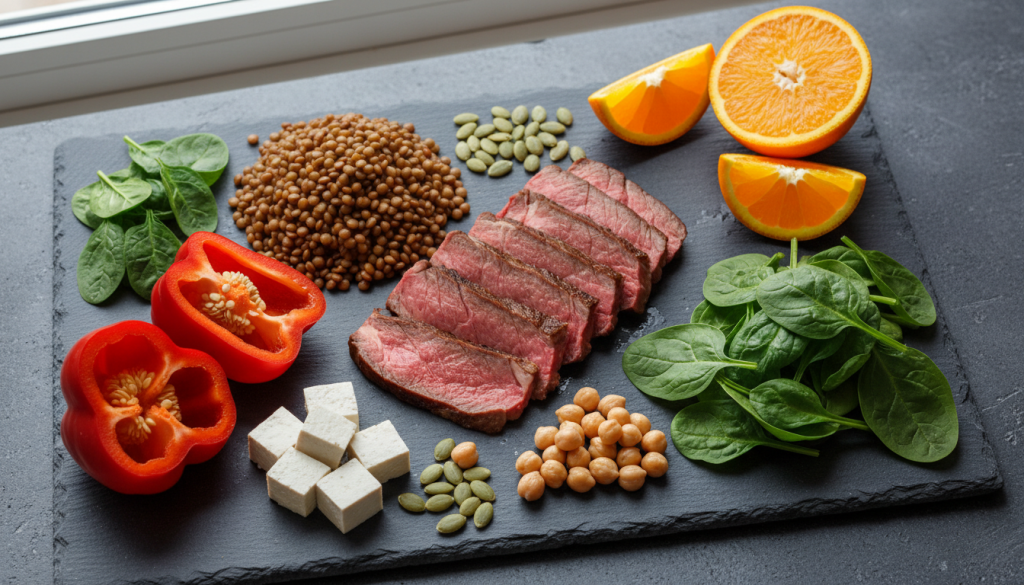
- Pair plant iron with vitamin C: add peppers, tomatoes, citrus, strawberries or broccoli to iron-rich meals.
- Combine heme and non-heme sources: a little meat or fish boosts iron absorption from beans and greens.
- Keep tea and coffee between meals: their polyphenols can sharply reduce iron absorption.
- Separate calcium supplements from iron-rich meals.
- Cook in a cast-iron pan, which can add small amounts of iron to food.
Iron supplements: what to know
If your doctor confirms iron deficiency, they will usually recommend a supplement and re-check your blood after a few months. Research suggests taking iron every other day may improve absorption and reduce side effects such as constipation, nausea and dark stools. Do not take iron supplements without testing: too much iron can damage organs, and people with hereditary hemochromatosis absorb too much already. Keep iron supplements locked away from children; accidental overdose is very dangerous for young children.
Iron also supports immune cells; learn more in our guide to supporting your immune system naturally.
Frequently asked questions
How long does it take to recover from iron deficiency?
Energy often improves within a few weeks of treatment, and hemoglobin usually normalizes within about two months. Rebuilding iron stores can take three to six months or longer.
Can you have low iron without anemia?
Yes. Iron stores (ferritin) can be low while hemoglobin is still normal, and this can still cause fatigue and other symptoms.
Is spinach a good source of iron?
Spinach contains iron, but also oxalates that reduce absorption. It still contributes, especially when eaten with vitamin C-rich foods.
Medical disclaimer: This article is for general education only and is not a substitute for personal medical advice. See a doctor for testing before taking iron supplements, and keep all iron products out of reach of children.
